
Immagine

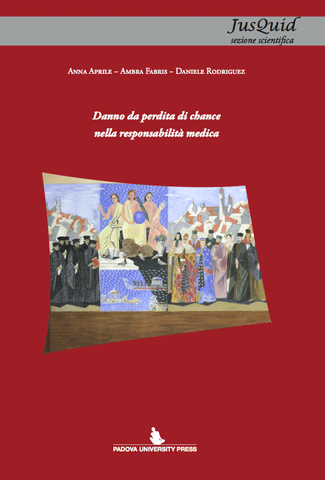
Danno da perdita di chance nella responsabilità medica. E-book
The loss of chance is a relatively recent category of damage in Italian law, initially opposed by legal scholars and largely ignored by courts. It was first explicitly recognised as compensable in 1983, in a case involving workers who had been prevented from taking part in recruitment examinations. Since then, its application has gradually expanded to several areas of law.
The text focuses particularly on the loss of chance in medical liability, one of the most complex areas in which it must be assessed. Through an analysis of legal scholarship and significant Supreme Court decisions, the authors examine the main issues concerning the causal link between conduct and damage.
The concept of loss of chance emerged from the difficulty of proving causation, especially in medical cases, where scientific uncertainty can prevent injured patients from obtaining compensation, even when negligent conduct has occurred. To overcome this problem, the law recognises the loss of a real possibility of achieving a better outcome as damage in itself, even when the probability is insufficient to prove a direct causal connection.
Therefore, chance plays a dual role: it is both a tool for assessing causation and the actual object of the damage. Despite its growing recognition in case law, this concept remains controversial and raises several interpretative difficulties regarding its legal nature and the assessment of professional liability.